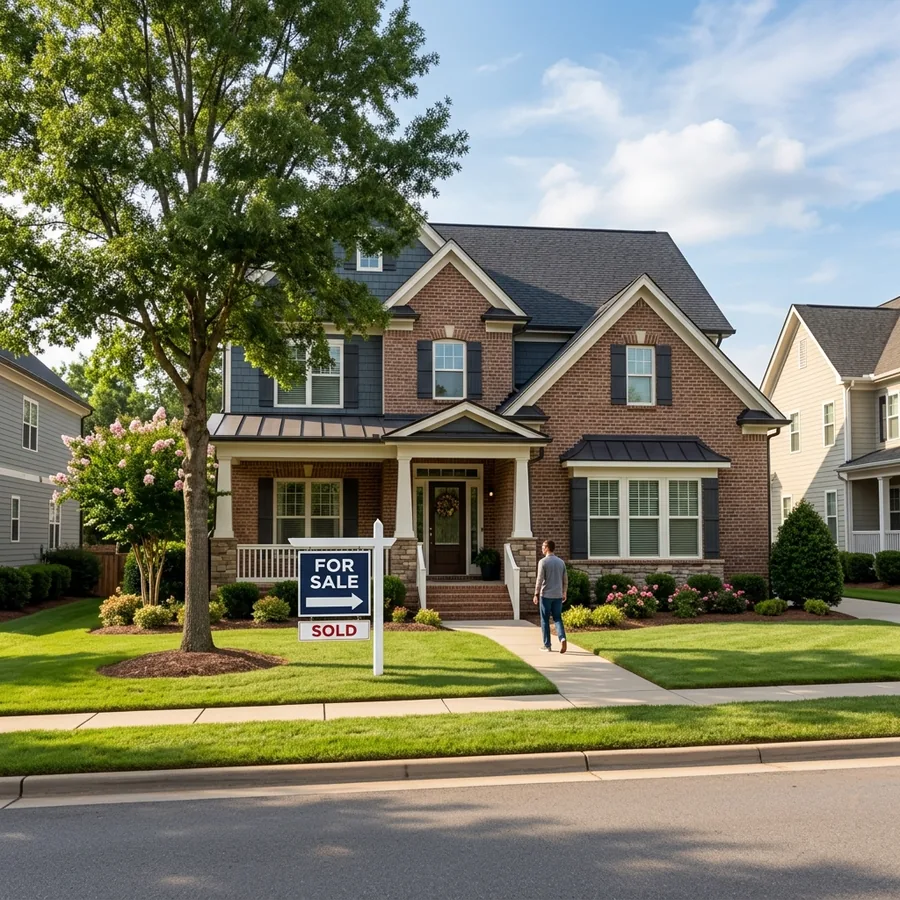
The 2026 Charlotte Housing Market Reality
The Charlotte real estate landscape has officially transitioned from the frenzied, sight-unseen seller's market of the early 2020s into a balanced, highly data-driven environment. Across Mecklenburg, Union, and Cabarrus counties, the dynamics of buying and selling have fundamentally shifted. Whether you are listing a luxury estate in SouthPark or Ballantyne, a historic bungalow in Dilworth or Plaza Midwood, or a spacious suburban build near the Huntersville or Fort Mill borders, today's buyers are operating with a completely different playbook.
According to the Canopy Realtor Association's July 2026 Charlotte market report, inventory in the greater Charlotte region has grown to 3.7 months of supply, up 5.7 percent year over year. This increase in available homes gives buyers significantly more choices and negotiating power than they have had in years. Furthermore, with the Freddie Mac Primary Mortgage Market Survey reporting the 30-year fixed-rate mortgage averaging 6.65% in its August 20, 2026 survey, buyers are incredibly price-sensitive. They are highly educated on local valuations, meticulously tracking neighborhood trends, and cautious about their monthly principal-and-interest payments. (Please note: Any worked numbers or rates discussed are hypothetical examples; always obtain loan-specific disclosures from a licensed lender to understand your exact costs).
When homes hit the market overpriced in this climate, they sit. They accumulate days on market (DOM) and almost always end up selling for less than they would have if priced correctly from day one. Buyers simply will not overpay when borrowing costs are elevated and alternative inventory is readily available. The days of throwing a high number at the wall and watching multiple buyers fight over it are over; precision is now the ultimate currency in Charlotte real estate.
The Critical First 14 Days on Market
In the real estate industry, time is your absolute worst enemy. The "listing momentum" curve dictates that a new listing receives its maximum visibility on the MLS, consumer portals, and buyer agent alert feeds during its first two weeks. This 14-day window is the golden period when the most motivated, pre-approved buyers—those who have been waiting for a home exactly like yours to pop up—are looking at your property.
If your home is priced too high out of the gate, serious, qualified buyers will simply pass it over. They often assume the seller is inflexible, or they decide to wait on the sidelines, expecting inevitable price drops. Once a home crosses the 30-day mark on the market, the psychological shift among the buyer pool is palpable. They stop asking, "Will we lose this home to another offer?" and start asking, "What is wrong with this house?"
This stagnation leads directly to lowball offers and aggressive repair demands. In North Carolina, the Due Diligence period comes from the standard Offer to Purchase and Contract (Form 2-T) published jointly by the North Carolina Association of REALTORS and the North Carolina Bar Association: a contractual window in which the buyer pays a non-refundable fee directly to the seller for the right to terminate for any reason. The brokers who negotiate it are licensed and regulated by the North Carolina Real Estate Commission (NCREC). Because buyers are putting their own liquid capital at risk upfront, they are highly reluctant to offer a strong Due Diligence fee on a stale, overpriced listing where they anticipate a difficult, drawn-out negotiation over repairs. They will reserve their strongest offers and highest Due Diligence fees for fresh, accurately priced homes.
The Danger of the "Testing the Market" Fallacy
One of the most common and financially dangerous temptations for Charlotte sellers is the "testing the market" fallacy. It usually sounds something like this: "Let's list $30,000 higher and see if someone bites; if we don't get any traction, we can always come down later." In the 2026 market, this strategy is practically guaranteed to backfire.
Public price cuts cause compounding damage to your listing. First, they stigmatize the property. When buyers see a price reduction alert, they immediately sense blood in the water, assuming the seller is growing desperate or that the home has hidden flaws. Second, you lose all of your negotiating leverage. Instead of buyers competing against each other to win your home, you are competing against your own days on market and the perception of a stale listing.
Furthermore, chasing a moving market downwards rarely works. If you overprice and then incrementally drop the price by $5,000 or $10,000 every few weeks, you are constantly lagging behind what the market is actually willing to pay. Multiple price reductions signal desperation to buyer agents, who will then advise their clients to negotiate heavily on terms, closing costs, or repair concessions. It is also important to note that a purchase-price reduction during negotiations does not automatically reduce your property's assessed tax value with the county; those are entirely separate processes governed by local tax assessors. Finally, the longer your home sits, the more you pay in holding costs—including mortgage interest, property taxes, insurance, and maintenance—eating directly into your net proceeds.
Strategic Pricing Methodologies for Charlotte Sellers
To maximize your net proceeds and ensure a smooth transaction, you must employ strategic pricing methodologies. This begins with a rigorous, data-backed Comparative Market Analysis (CMA). A proper CMA analyzes recent closed sales (solds) within a 0.5 to 1-mile radius over the last 90 to 180 days. It does not rely solely on active listing asking prices, which only represent what sellers hope to get, not what buyers are actually willing to pay. A skilled agent will adjust these comparable sales for differences in square footage, lot utility, age, and specific upgrades.
Price bracket psychology and search filters also play a massive role in how buyers find your home online. For example, listing at $499,900 is a classic retail strategy, but in real estate search portals, it is crucial to understand bracket cutoffs. Listing at exactly $500,000 captures buyers filtering their search for homes "up to $500k" as well as those searching for homes "starting at $500k." However, if you list at $505,000 to "leave room for negotiation," you completely cut off the entire pool of buyers whose maximum search filter is capped at $500,000. You lose half your audience for a mere 1% increase in asking price.
Sellers must also weigh the benefits of pricing just below market fair value versus pricing at exact market value. Pricing slightly below fair value can stimulate multi-offer interest, creating an auction-like environment that drives the final price up and results in highly favorable terms, such as larger Due Diligence fees and fewer repair contingencies.
When you negotiate offers, a buyer may ask for a seller concession to fund a mortgage buydown. Treat it like any other concession: weigh what it costs you against what it adds to the offer, and check it against a net sheet before you agree. How the buydown itself works — including what happens to unused subsidy funds if the loan is paid off early — is set by the lender's program rules and the executed buydown agreement, so send those questions to the buyer's lender. The CFPB publishes plain-language explanations if you want to understand what your buyer is being offered.
Comparative Impact Table & Pre-Listing Valuation CTA
The data is abundantly clear: pricing your home accurately from the very beginning yields a smoother transaction, significantly less stress, and a higher net profit at the closing table. The table below illustrates the stark contrast between a properly priced Charlotte home and one that hits the market artificially inflated.
| Metric | Priced Accurately from Day 1 | Overpriced by 5-10% |
|---|---|---|
| Average Days on Market | 10 - 21 Days | 45 - 90+ Days |
| Showing Volume | High (Concentrated in first 14 days) | Low (Scattered, drops off quickly) |
| Final Sale vs. List Price Ratio | 99% - 102% | 90% - 95% (After multiple price cuts) |
| Seller Stress Level | Low to Moderate | Extremely High |
If you are planning to sell your home in Mecklenburg, Union, or Cabarrus county this year, do not leave your hard-earned equity to chance. You need a comprehensive, data-driven strategy tailored to your specific neighborhood and property condition. We invite you to request a complimentary Charlotte Comparative Market Analysis and home valuation to determine your property's competitive pricing sweet spot in the 2026 market.
Sources and Further Reading
- Canopy Realtor Association: More Choice, Steady Sales Define Charlotte's July Housing Market (August 28, 2026)
- Freddie Mac: Freddie Mac Primary Mortgage Market Survey
- NCREC: North Carolina Real Estate Commission
- CFPB: Consumer Financial Protection Bureau
Frequently Asked Questions
The first 14 days generate the highest level of buyer interest and online visibility. Serious, pre-approved buyers monitor new listings closely, and homes priced correctly during this window are most likely to receive strong offers and high Due Diligence fees.
No. A purchase-price reduction during real estate negotiations does not automatically reduce your assessed tax value. Property tax assessments are determined by county tax assessors through a separate, formal evaluation and appeal process.
A CMA evaluates recent closed sales of similar properties within a half-mile to one-mile radius over the past 90 to 180 days. It focuses on what buyers have actually paid rather than active asking prices, adjusting for differences in square footage, age, and upgrades.