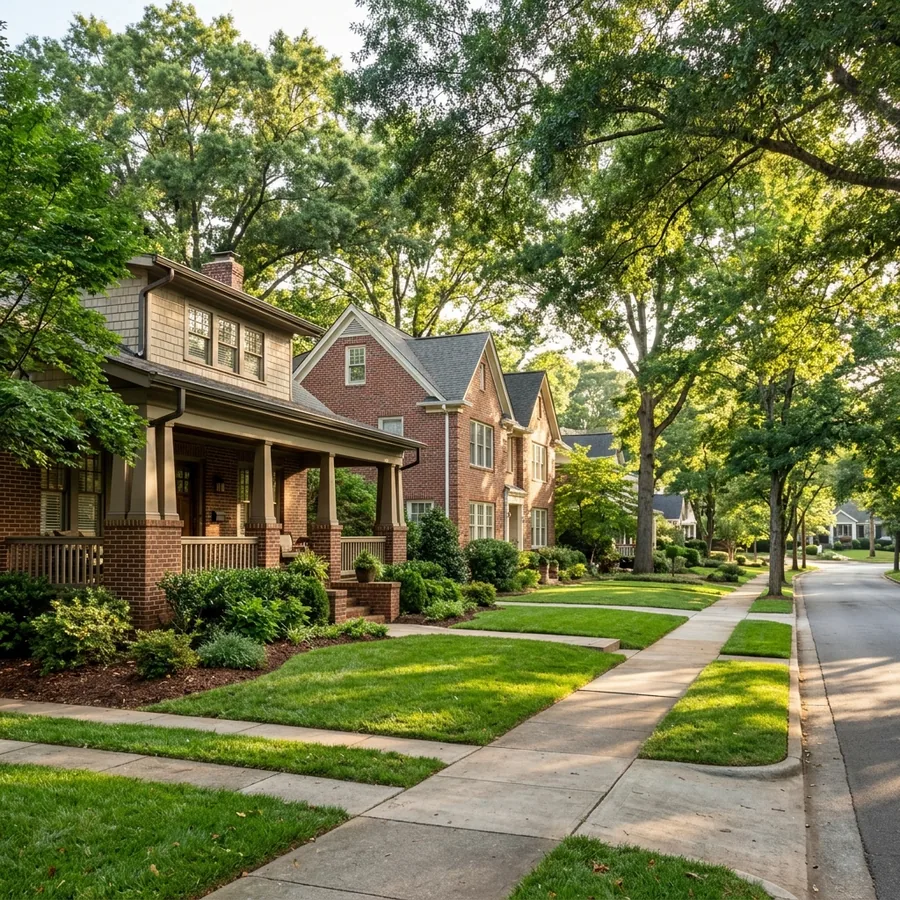
Every property in Mecklenburg County is getting a new tax value as of Jan. 1, 2027, and notices are due to go out in early 2027. After a first review, the county reports a median increase of about 15% for homes and about 30% for commercial property.
You don't have to wait for the notice to act. You can check your property record now and send the county corrections while appraisers are still reviewing values. Here's what the county has said as of November 2026, and what I'd do with it. This only covers property in Mecklenburg County. If your home is in Fort Mill, Mooresville or another town outside the county, a different county sets your schedule.
Key dates for the 2027 revaluation
| When | What happens |
|---|---|
| Now through the end of 2026 | County staff keep reviewing properties. This is your window to correct your record. |
| Jan. 1, 2027 | The date the new values are measured from. |
| Early 2027 | Notices are mailed and online records are updated. There's no exact date yet. In 2023, notices started going out on March 17. |
| 30 days from the date on your notice | Deadline to ask for an informal review. |
| Spring 2027 | City, county and town boards set tax rates. |
| May 2027 | The county's timeline shows the formal appeal period ending. The exact date isn't posted, so go by your notice. |
| July 2027 | Tax bills are mailed. |
What is a property revaluation?
A revaluation resets every property's tax value to its market value on a set date. State law requires one at least every eight years, and Mecklenburg has done one every four years since 2019.
The new value is only half of your bill. The Board of County Commissioners, Charlotte City Council and town boards set the tax rates, and your bill is your value multiplied by those rates. My Mecklenburg County property tax guide explains how the rates work.
What the early numbers show
The county says 428,506 parcels have had an initial review. Its September slides say appraisers analyzed 56,000 recent qualified sales, and they break the medians down further than the headline numbers do.
| Residential price range | Median increase |
|---|---|
| Up to $300K | 16% |
| $300K to $500K | 11% |
| $500K to $750K | 21% |
| $750K to $1M | 25% |
| $1M to $2M | 26% |
| Over $2M | 32% |
| Commercial type | Median increase |
|---|---|
| Industrial | 39% |
| Other | 31% |
| Retail | 27% |
| Apartment | 26% |
| Office | 25% |
Read these with care. A median means half of the properties in that group came in higher and half lower, so yours could land well above or below it. These are also early numbers, because the county says appraisers will review every neighborhood again before finalizing values. And the slide doesn't say whether the price ranges use old or new values.
The useful part is the spread. The countywide figure is about 15%, but the median runs from 11% in the largest group to 32% at the top. Don't assume the headline number is yours.
Why your bill may not rise by the same percentage
The county says rates are adjusted after a revaluation to stay revenue-neutral unless elected officials choose otherwise. State law requires each budget in a reappraisal year to state the revenue-neutral rate. That's the rate estimated to bring in what the current rate would have brought in without the reappraisal. Boards still choose the rate they adopt.
Revenue-neutral describes the government's total revenue, not your bill. If your value rises more than most, you can pay more even at a revenue-neutral rate. If it rises less than most, you could pay less.
Here's the math on a made-up example. A home in Charlotte valued at $400,000 pays about $3,143 a year at the current combined city and county rate of 0.7857 per $100. If its value rises 15% to $460,000 and the rate stays the same, the bill is about $3,614. The combined rate would have to fall to about 0.6832 for that bill to stay flat. This isn't a forecast, since 2027 rates aren't set and each town has its own.
What to check on your property record now
Look up your property and open its record card. The county's own example is a home with two bathrooms listed as having three, which could produce a higher value. I'd check these:
- Square footage, including whether unfinished space is counted as finished
- Number of bedrooms and bathrooms
- Year built and condition
- Additions, garages, decks, pools and outbuildings, including any that are gone
- Lot size
If something is wrong, the county asks you to submit the change through its revaluation page. You can also call the office at 980-314-4226. Keep whatever backs up the correction, such as photos, a survey or permits, because you may want it again if you appeal.
While you're there, look at the county's tax relief programs. They include options for qualifying older or disabled owners and disabled veterans, each with its own application and requirements. In 2025, most of those applications were due by June 1, so check the date for 2027.
If your bill is already a strain, look at the county's HOMES grant too. It's for income-qualified homeowners, it pays toward the tax bill, and you can't combine it with some of the state programs. As of this writing, the county lists Nov. 20 as the deadline for this year's round, and it awards grants in the order applications arrive until the money runs out.
How to appeal your 2027 property value
You can't file yet. The county says revaluation-year appeals can't be filed until notices have been mailed. After that, here's how the process works:
- Informal review (optional). Ask within 30 days of the date on your notice, and you and the assessor's office go over it together. This is the place to fix factual errors. The county lists it as an option alongside a formal appeal, not a required first step, so don't let the formal deadline pass while you wait.
- Formal appeal to the Board of Equalization and Review. File by the deadline on your notice. The county's current instructions ask for supporting documents at filing and no later than 45 days after you submit the form, so check whether that changes for 2027.
- N.C. Property Tax Commission. This is the next step after the board. If you disagree with the board's decision, you have 30 days to appeal to this state body in Raleigh. It follows the rules of evidence, and the county encourages individual owners to consult an attorney.
At the board, you have to prove that the county's value is wrong and that it "substantially exceeds" fair market value. A big percentage jump doesn't prove that, and neither does a high tax bill. Since the value is measured as of Jan. 1, 2027, I'd lead with sales of similar homes close to that date. A recent appraisal helps too, as do photos and repair estimates for problems a buyer would price in.
There's one risk to know about. State law lets the board reduce, increase or confirm the value, and all three happen. The Charlotte Observer reported 23,285 informal appeals through June 30, 2023, and 6,962 formal appeals through July 6. Of the first 387 formal cases closed by then, the board approved a decrease in 210, no change in 60 and an increase in 10, and the rest were mostly withdrawn or had no listed decision. That was an early snapshot, not the final count. Look at the sales before you file, not after.
It's still worth getting right. The county generally carries a value forward between revaluations unless something like a clerical error or a physical change applies. A value you think is too high could stay with you until the next revaluation.
If you're buying or selling in 2027
Selling. Your tax value isn't your list price. Price from what similar homes are selling for now, and see how to price your home. Buyers can look up your new value, so be ready to explain a big gap between it and your asking price.
Buying. Don't budget from the seller's old tax bill. Use the 2027 value and, once they're set, the new rates. If your lender escrows taxes, your monthly payment can change after the new bill comes out. If you close before bills go out, ask your closing attorney how taxes will be prorated. The rest of what you'll pay at the table is in this closing costs guide.
If you own or lease commercial property
Owners use the same record check and appeal process. Tenants should look at their leases, because the increase can reach them. On a triple net lease, you pay your share of the property's taxes. On a base-year lease, you pay your share of the increase. The commercial lease types comparison and lease negotiation guide explain how each one works. If your lease passes taxes through, ask your landlord what they expect to bill in 2027 and build it into your budget.
What I'd do this month
Check your record, send any corrections, and save your backup. Then, when your notice arrives, compare the value with real sales before you decide anything. If you'd like help seeing what similar properties sold for, ask me for a home value review.
This is general information, not tax or legal advice. Dates and figures are from the county as of November 2026 and may change, so your notice controls.
Sources and Further Reading
- Mecklenburg County: We Value Mecklenburg County: Update on 2027 Property Revaluation
- Mecklenburg County Office of Tax Administration: Let's Talk Value: 2027 Property Revaluation
- Mecklenburg County Office of Tax Administration: Property Value Appeals
- Mecklenburg County Office of Tax Administration: 2027 Revaluation: Schedule of Values, Standards, and Rules (slides, Sept. 1, 2026)
- Mecklenburg County: Property Owners to Receive Revaluation Notices Beginning March 17 (2023)
- North Carolina General Assembly: G.S. 159-11: Preparation of the budget
- North Carolina General Assembly: G.S. 105-322: County board of equalization and review
- Mecklenburg County: FY 2026-2027 tax brochure
- Mecklenburg County Office of Tax Administration: Tax Relief Programs
- The Charlotte Observer, via AOL: More than 20,000 questioned their property's value (July 2023)
Frequently Asked Questions
Early 2027. The county hasn't announced an exact date. In 2023, notices started going out on March 17.
It depends on how much your value changes and what tax rates local boards set in spring 2027. Even at a revenue-neutral rate, an owner whose value rises faster than most can pay more. Nobody can calculate a 2027 bill until the rates are set.
Yes. North Carolina law lets the Board of Equalization and Review reduce, increase or confirm the value it's reviewing, so compare your value with recent sales of similar properties before you file.


